Caribbean Food Centennial: Foods That Kept Traditions Alive
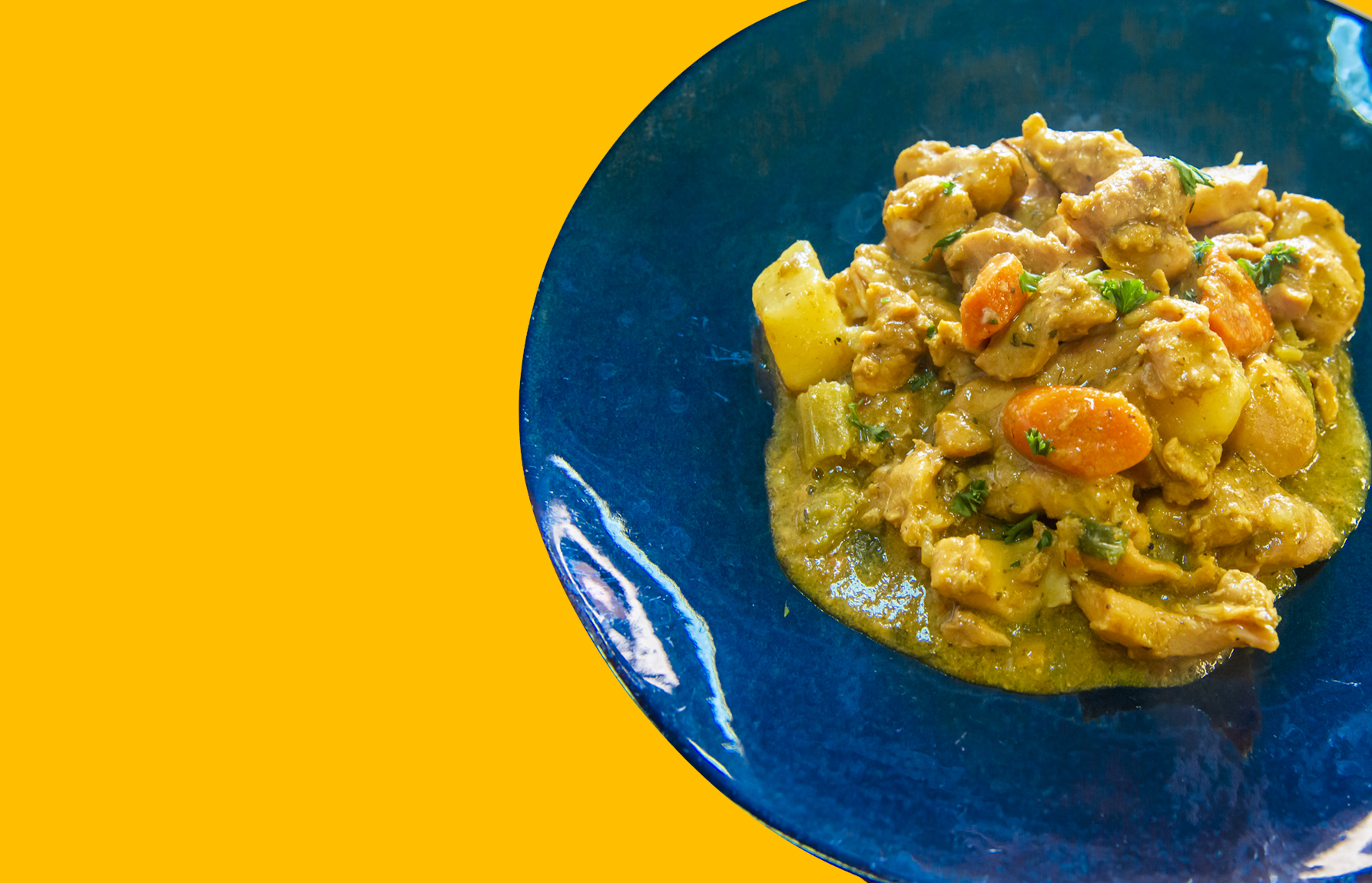
A centennial invites a certain kind of looking back. Not the polished, ceremonial version that lives in speeches, but the everyday record carried by hands, kitchens, market stalls, and Sunday tables. When people talk about a hundred years of Caribbean life, politics often gets center stage. Food deserves equal billing. Across the region, recipes did more than feed families. They preserved memory, stretched scarce ingredients, marked celebration, and kept cultural lines connected across islands, coasts, and generations.
The phrase caribbean food centennial fits that larger story well because food has been one of the region’s most durable archives. A pot of pelau, a bowl of mannish water, a plate of souse, cassava bread wrapped for travel, or black cake cut at Christmas all carry something more than flavor. They hold migrations, forced labor, Indigenous survival, African technique, Indian indenture, Chinese shopkeeping, Middle Eastern trade, colonial restrictions, and the ingenuity that always seems to emerge where resources are uneven and people still insist on making a feast.
What kept traditions alive was not a museum instinct. It was repetition under pressure. Grandmothers cooked what they knew because it worked. Fishermen salted catch because refrigeration was unreliable or absent. Cane workers relied on filling starches and one-pot meals because labor demanded endurance. Women who sold food on roadsides or in town markets built reputations on consistency, and consistency caribbean food centennial is one of the oldest engines of cultural preservation. If enough people expect a taste to be a certain way, that taste survives.
The table was never only about eating
Across the Caribbean, the meal has long done social work. It announces hospitality, settles disputes, celebrates births, sends off the dead, and marks the calendar more reliably than some official commemorations. Ask people what they remember from childhood, and they often start with smell before they get to narrative. Browning sugar in a heavy pot. Pimento in soup. Coconut milk reducing slowly. Fresh thyme bruised between fingers. Saltfish soaking in water before dawn.
Those details matter because many Caribbean food traditions survived periods when formal institutions did little to preserve them. Recipe books, where they existed, often leaned toward elite or colonial tastes. Everyday food lived elsewhere, in memory and improvisation. Measurements were not always written because they were embodied. A cook knew when the dough felt right, when the oil was hot enough, when the callaloo had reached the correct thickness. That kind of knowledge can disappear fast if it is not practiced, yet in the Caribbean it stayed alive because meals were communal and frequent. Someone was always watching, helping, tasting, learning.
There is also the practical side. Traditional foods lasted because they were adaptable. A recipe could absorb local shortages, family preferences, and seasonal changes without losing its identity. That flexibility is one reason Caribbean cuisines remain so resilient. The dish stays recognizable even when the exact fish, bean, yam, or pepper changes.
Ground provisions built endurance and identity
Before imported flour, rice, and packaged goods took on the oversized role they now have in many diets, ground provisions formed the backbone of countless Caribbean meals. Yam, cassava, sweet potato, dasheen, eddoes, green banana, breadfruit, and plantain fed workers, children, and elders alike. These foods were not glamorous in the modern sense, but they were reliable, filling, and deeply local.
Cassava deserves special respect in any centennial reflection. Its place reaches back to Indigenous Caribbean societies, long before colonial plantation systems transformed the region. Bitter cassava had to be processed carefully, which required technical knowledge and patience. From that knowledge came cassava bread, farine, and bammy, among other staples. In some islands and mainland Caribbean communities, cassava remained a continuity thread where so much else was violently disrupted. You can draw a straight line from pre-colonial foodways to present kitchens through cassava in a way that is rare and significant.
Breadfruit tells a different but equally revealing story. Introduced through colonial networks, it eventually became naturalized in the Caribbean diet. Roasted over coals, boiled, fried, or turned into chips, it moved from botanical project to household staple. In lean periods, breadfruit could feed a family from a single tree. That matters more than culinary nostalgia. It explains why older generations still speak of fruiting seasons with the seriousness younger people often reserve for supermarket schedules.
Ground provisions also taught a regional palate to value texture. The dry fluff of yam, the creaminess of dasheen, the chew of cassava bread, the sweet firmness of roasted plantain, the soft center of boiled green banana, these are not side notes. They shape what feels like a complete meal in Caribbean homes.
Salt, smoke, and sun preserved more than ingredients
If there is one theme that recurs across a hundred years of Caribbean cooking, it is preservation. Not the trendy version marketed in glass jars, but the old necessity of making food last in hot climates and uncertain economies. Saltfish is perhaps the most obvious example. Imported cod became so central that it now feels native to many island traditions. Ackee and saltfish in Jamaica, buljol in Trinidad and Tobago, saltfish fritters and sautéed saltfish dishes in many territories, these meals reveal how outside commodities can be fully absorbed into local identity.
Salted meat served a similar function. Pigtail, salt beef, and smoked herring entered pots not because they were luxurious, but because they were available, durable, and intensely flavorful. They seasoned large quantities of peas, greens, rice, and provisions. When budgets were tight, a small amount could transform a whole meal. In practical kitchen terms, that is genius. In cultural terms, it became habit, preference, and eventually tradition.
Smoking and sun drying also mattered in fishing communities. Where refrigeration was late to arrive or unreliable for decades, preserving the catch was not optional. Smoked herring, dried shrimp, and cured fish appear again and again in Caribbean cooking because they solved a problem. The best food traditions often begin that way. Convenience comes later. First, there is need, and someone learns how to turn need into appetite.
One-pot cooking made abundance out of constraint
The Caribbean genius for one-pot cooking deserves to be discussed with more seriousness than it usually gets. Pelau, cook-up rice, rundown, oil down, pepperpot, soups dense with dumplings and provisions, these dishes represent technical intelligence shaped by labor realities. A single pot conserves fuel, captures flavor, and allows starch, protein, herbs, and fat to become more than the sum of their parts.
Oil down in Grenada is a strong example. Breadfruit, salted meat, dumplings, turmeric, callaloo, coconut milk, and spices cook down together until the pot yields something rich, fragrant, and unmistakably communal. It is feast food, yes, but also a lesson in efficiency. The same can be said for Guyanese cook-up rice, where rice, peas, meat, coconut milk, and aromatics merge into a complete meal with deep roots in both practicality and celebration. Pelau in Trinidad has a similar logic, though with its own rhythm and flavor profile, often led by browned sugar, pigeon peas, meat, and rice.
What these dishes preserved was not only recipe structure. They preserved the expectation that a proper meal could be created from layered technique rather than expensive ingredients. Browning, seasoning, sweating herbs, managing liquid, and understanding carryover cooking mattered more than prestige cuts. Cooks learned to trust process. That confidence gets inherited.
Sunday food and holiday food carried the calendar
Many traditions survived because they were tied to recurring moments. A family might not cook a labor-intensive dish on a random Tuesday, but they would make time for it at Christmas, Easter, Carnival, a wake, a wedding, or Sunday after church. Repetition fixed those dishes in memory and gave younger generations a chance to learn them.
Black cake is a perfect illustration. Good black cake is not rushed. Fruit is soaked, often for weeks or longer, in wine and rum. Spices are balanced carefully. Browning deepens color and bitterness. The cake itself needs skill to avoid heaviness. People who bake it well are known for it. In many Caribbean families, the yearly making of black cake is as much a ritual as any liturgical event. The same can be said for sorrel drink prepared with ginger and cloves, pastelles in Trinidad and Tobago during Christmas season, ham glazes, ginger beer, and various festive breads.
Then there are the foods linked to mourning and community care. Soups after funerals, shared casseroles, porridge for the sick, broths for postpartum recovery, these are less photographed than holiday tables but every bit as important. They endure because they meet emotional and physical needs. A tradition survives best when it comforts.
Street food kept culture public
Not every preserving force came from the home. Street food and small-scale vendors played a huge role in keeping Caribbean food traditions visible, affordable, and social. Doubles in Trinidad, bake and shark, Jamaican patties, fish cakes, roti, coconut drops, tamarind balls, pholourie, corn soup sold late at night, all of these made heritage edible on the move.
That matters more than it first appears. Once a food enters daily public life, it stops depending on a single household to survive. A schoolchild can know the taste of a patty even if no one at home bakes pastry from scratch. A market worker can still eat souse before dawn. A traveler arriving by ferry can recognize a place by what is sold near the dock. Vendors become cultural stewards, even if they would never use that language.
They also innovate within tradition. A seasoned vendor knows where customers accept variation and where they do not. Spice levels can shift. Fillings can change. Portion size can adapt to inflation. But if the bara in doubles loses its softness, or the channa lacks balance, people notice. Street food enforces standards through appetite and memory.
Rice, peas, and the grammar of adaptation
One of the most striking features of Caribbean food over the past century is how imported staples became thoroughly localized. Rice is the obvious case. It entered different territories through different historical routes, yet now it anchors some of the region’s most beloved dishes. Rice and peas in Jamaica, peas and rice elsewhere, coconut rice, cook-up rice, pilaf-like festival dishes, all reflect a broader regional habit of taking a grain and making it answer local logic.
Beans and peas deserve equal attention. Red peas, pigeon peas, black-eyed peas, gungo peas, split peas, lentils in Indo-Caribbean cooking, each plays a role in adding protein, bulk, and flavor. Combined with coconut milk, thyme, scallion, onion, garlic, hot pepper, and sometimes cured meats, they produce dishes with remarkable depth for relatively low cost. For families navigating hard decades, that mattered enormously.
The practical lesson was always clear. A meal did not need expensive ingredients to carry dignity. It needed seasoning judgment, proper cooking, and enough volume to feed everyone at the table. That value system is one reason so many Caribbean people still measure a cook not by novelty but by command of fundamentals.
Indo-Caribbean influence changed the region permanently
No centennial look at Caribbean food traditions is complete without acknowledging Indo-Caribbean cooking and its deep regional impact. In territories shaped by Indian indenture, especially Trinidad and Tobago and Guyana, roti, curry, chutneys, saheena, aloo pies, and sweets entered the everyday fabric of national eating. Over time, these foods also moved across territorial boundaries. A Caribbean without roti shops now feels almost unthinkable in many places.
What is especially interesting is how Indian techniques and ingredients transformed after arrival. Local peppers, local greens, available meats, and Caribbean rhythms changed the food. Curry in the Caribbean is not a static transfer from the subcontinent. It evolved. The same is true for mango achar, kuchela, split pea fillings, and the wrapping and selling traditions that grew around them.
This was not one-way influence. African, Creole, Indigenous, and European elements met Indo-Caribbean foodways in markets and households, producing forms that are now distinctly Caribbean. Doubles themselves are a strong example of adaptation and local genius. They are not simply inherited. They are invented within a Caribbean context and sustained by public devotion.
The role of women, though not only women
In most Caribbean communities across the twentieth century, women bore the heaviest burden of preserving food traditions, though men also played important roles in fishing, outdoor cooking, pit roasting, festival food, and professional kitchens. The daily transfer of recipe knowledge, however, often happened through mothers, grandmothers, aunts, godmothers, and market women. They knew which yam variety boiled best, how to wash saltfish properly, how long cassava bread kept, what to cook for someone recovering from illness, and how to stretch a piece of meat across a large family meal without making the table feel meager.
This labor was often undervalued because it was ordinary. Yet it required systems thinking before that term existed in popular use. Budgeting, fuel management, seasonality, preservation, child feeding, hospitality, and ceremonial obligations all met in the kitchen. A woman making soup for ten on limited money was doing logistics, sensory calibration, and cultural preservation at once.
In many homes, recipes were taught indirectly. Children grated coconut, shelled peas, peeled provision, cleaned callaloo, rolled dough, and watched. Correction came in small phrases. Not too much water. Let the seasoning catch. Taste again. Leave it. That educational style built intuition rather than strict dependency on written formulas. It also explains why some Caribbean cooks find it difficult to write recipes that satisfy outsiders. Their knowledge is procedural and sensory, not always numerical.
What modernization threatened, and what it did not
It is easy to romanticize continuity and ignore disruption. Over the last century, Caribbean food traditions have faced real pressure from imported processed foods, changing work patterns, migration, shrinking household cooking time, tourism-driven standardization, and the fading of agricultural self-sufficiency in some areas. The shift from wood fires and coal pots to gas and electric stoves altered flavor in subtle but noticeable ways. Access to frozen meats and canned goods changed meal planning. Fast food chains, school schedules, and wage labor outside the home reduced time for long simmering, soaking, grating, and fermenting.
Still, traditions did not simply collapse. They adjusted. People began reserving certain dishes for weekends or holidays. Diaspora communities recreated ingredients through substitution. Frozen grated coconut replaced hand-grating in many kitchens, but the resulting curry or rice still carried the old flavor profile. Pressure cookers shortened the path to peas soup and stewed oxtail without erasing them from family menus. Even supermarket spice blends, imperfect as they can be, helped preserve certain combinations where time was short.
The trade-off is clear. Convenience protects some traditions by keeping them cookable. At the same time, it can flatten technique and narrow taste if every shortcut is accepted without judgment. A skilled cook knows where compromise is harmless and where it weakens the dish. Canned coconut milk may be perfectly respectable. Premixed green seasoning can be useful. But a soup that never gets enough herbs, or a curry that never gets its spices cooked properly, loses something essential.
The diaspora became an unexpected preservation engine
Migration scattered Caribbean people widely across North America, the United Kingdom, and beyond, but it also gave food a new kind of urgency. Abroad, meals became proof of belonging. A second-generation child who could not place every historical fact might still know the smell of curry goat, the snap of fried plantain, or the richness of a Christmas cake. Restaurants, church bazaars, carnival events, and family gatherings caribbean food centennial turned food into a portable homeland.
In diaspora communities, preservation often becomes more intentional than it was back home. People seek out specific cassava brands, debate the best pepper sauce, and freeze breadfruit when they can find it. They gather for labor-heavy foods because those foods justify being together. That effort can produce a sharper awareness of heritage than everyday abundance sometimes does on the islands themselves.
It also introduces change. Ingredients differ. Climate differs. Time is scarcer. Yet the emotional force of the food often intensifies. A bowl of callaloo in Toronto or London is never only lunch. It carries weather, memory, and distance.
What a centennial table teaches
Looking across a hundred years, the foods that kept traditions alive were not necessarily the fanciest or most photographed. They were the foods that survived ordinary life. The ones that fed workers before dawn, welcomed guests after church, anchored holidays, comforted mourners, stretched thin budgets, and gave children tastes they would spend adulthood trying to find again.
A few patterns stand out clearly:
- Foods endured when they were useful as well as beloved.
- Dishes survived through repetition tied to family and calendar.
- Flexibility helped recipes travel across islands, classes, and generations.
- Preservation methods shaped taste so deeply that necessity became preference.
- Public food culture, especially vendors and markets, kept traditions visible.
That is the real strength of the caribbean food centennial idea. It directs attention to the kitchen as a site of history, not just domestic routine. A people can lose documents, place names, land access, and language forms, yet still retain astonishing amounts of historical knowledge in food. Not everything is recoverable through recipes, of course. Food cannot carry the whole burden of memory. But in the Caribbean, it has carried far more than many outsiders realize.
If you want to understand how traditions stayed alive across a turbulent century, start with what was boiled, cured, wrapped, roasted, browned, pounded, soaked, and shared. Start with the dishes that appeared when money was short and when joy was abundant. Start with the cooks whose measurements lived in their palms. There, in the repetition of meals both humble and ceremonial, lies one of the clearest records of Caribbean continuity.
Reggae Pot Jamaican Grill
Address: 7562 S University Blvd Unit C, Centennial, CO 80122
Phone: (303) 997-5623
FAQ About caribbean food centennial
What Jamaican dishes can I try in Centennial?
Reggae Pot Jamaican Grill serves Jamaican specialties such as jerk chicken, stewed oxtail, curry goat, and ackee and saltfish. Check the current menu for availability.
What is ackee and saltfish?
It is Jamaica’s national dish. The restaurant prepares ackee with salted cod, onions, thyme, tomatoes, garlic, black pepper, and pimento.
Can I order Jamaican food for pickup in Centennial?
Yes. Choose the Centennial location at 7562 S University Blvd Unit C when placing a takeout order.